
Dynamic drivers are the oldest trick in headphone engineering; the old familiar, if you like. For decades, they powered everything from budget earbuds to studio staples, while newer ideas like planar magnetics, beryllium domes, metamaterial waveguides and ‘nanometre diaphragms’ took over the spotlight.
Somewhere along the way, the humble dynamic driver became unfashionable. Reliable, yes. Exciting? Not really. So when Audio-Technica unveiled the ATH-ADX7000 — a flagship that leans fully into dynamic-driver purity — it certainly raised some eyebrows.
The obvious question: why this, and why now?
We never saw the best of this old classic
As it turns out, the technology has finally caught up. Dynamic drivers, though relatively unfashionable when discussing the cutting edge of audiophile headphones, were never ‘bad’. However, their performance was limited by the manufacturing of the time: loose tolerances, material constraints, and one inevitable trade-off.
The moment you wanted higher impedance so the driver could push and stop the diaphragm (basically the speaker cone) more precisely, you had to accept a heavier voice coil (like a motor that moves the cone), which slowed everything down and affected articulation. That said, classic headphones like the HD650 or DT880, despite their limitations, were still beloved for their sound. A modern flagship built this way, however, wouldn’t pass muster today.
Fast-forward twenty years, and the narrative has shifted. Modern audio innovation is inherently more flashy: high-powered magnets, premium materials and more intricate acoustic structures. Dynamic drivers retreated into the background, still doing most of the world’s audio heavy lifting, but rarely treated as a poster child.
The ADX7000 is interesting precisely because it’s the audio equivalent of skinny jeans returning — minus the blood circulation issues.
Rethinking an old mechanism
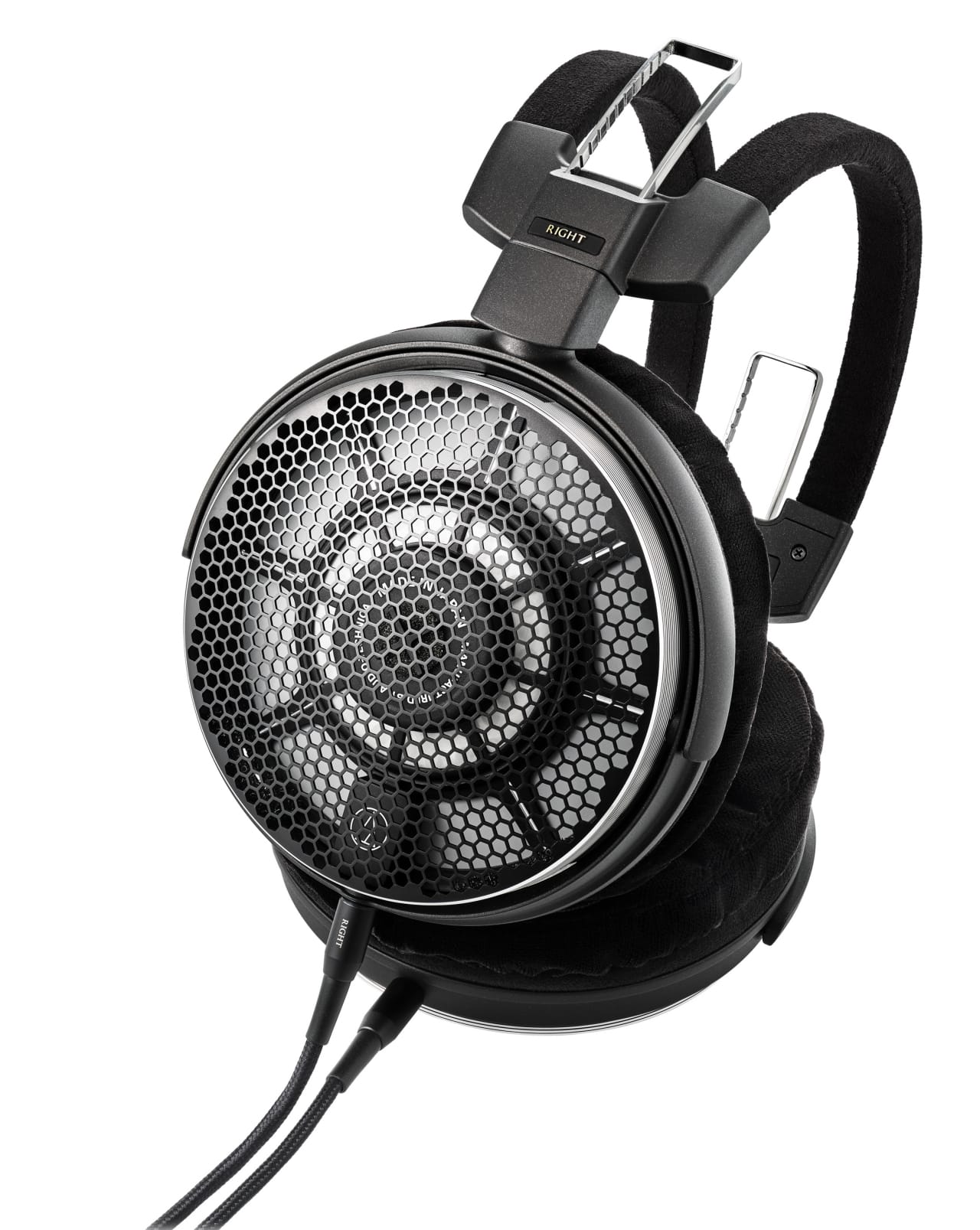 The ADX7000’s headline improvement isn’t a new wonder ‘magicalnesium’. Instead, it’s good ol’ manufacturing precision. Audio-Technica created a new process called High-Concentricity X (Transfer) Dynamic Transducer manufacturing, or HXDT. How they actually do it is less important than what it actually does: achieving tolerances of ±0.02 mm.
In English, this means that the driver components — magnet, coil, diaphragm, baffle — in the ADX7000 are aligned with tolerances roughly 10 times tighter than those in conventional dynamic-driver builds. When they are centred precisely around the same point, the diaphragm moves more cleanly, distortion drops because there’s less wobble, and every unit behaves more consistently.
The other curious design choice is the 490-ohm voice coil. Traditionally, high impedance meant more coil windings, and more windings meant more mass, which slowed the transients. As technology improved, high-impedance designs were among the first to go — more and more people wanted efficient headphones that didn’t require an amp that took over their entire desktop.
Which is why the new ADX7000 design seems counterintuitive at first glance. But it’s only possible because Audio-Technica claims it can increase the coil’s impedance without adding weight to the moving assembly. In doing so, the driver achieves greater electromagnetic control, more linear movement, better voltage scaling, and none of the classic sluggishness. It’s a long-standing concept made practical by modern production.
When airflow control does two things at once
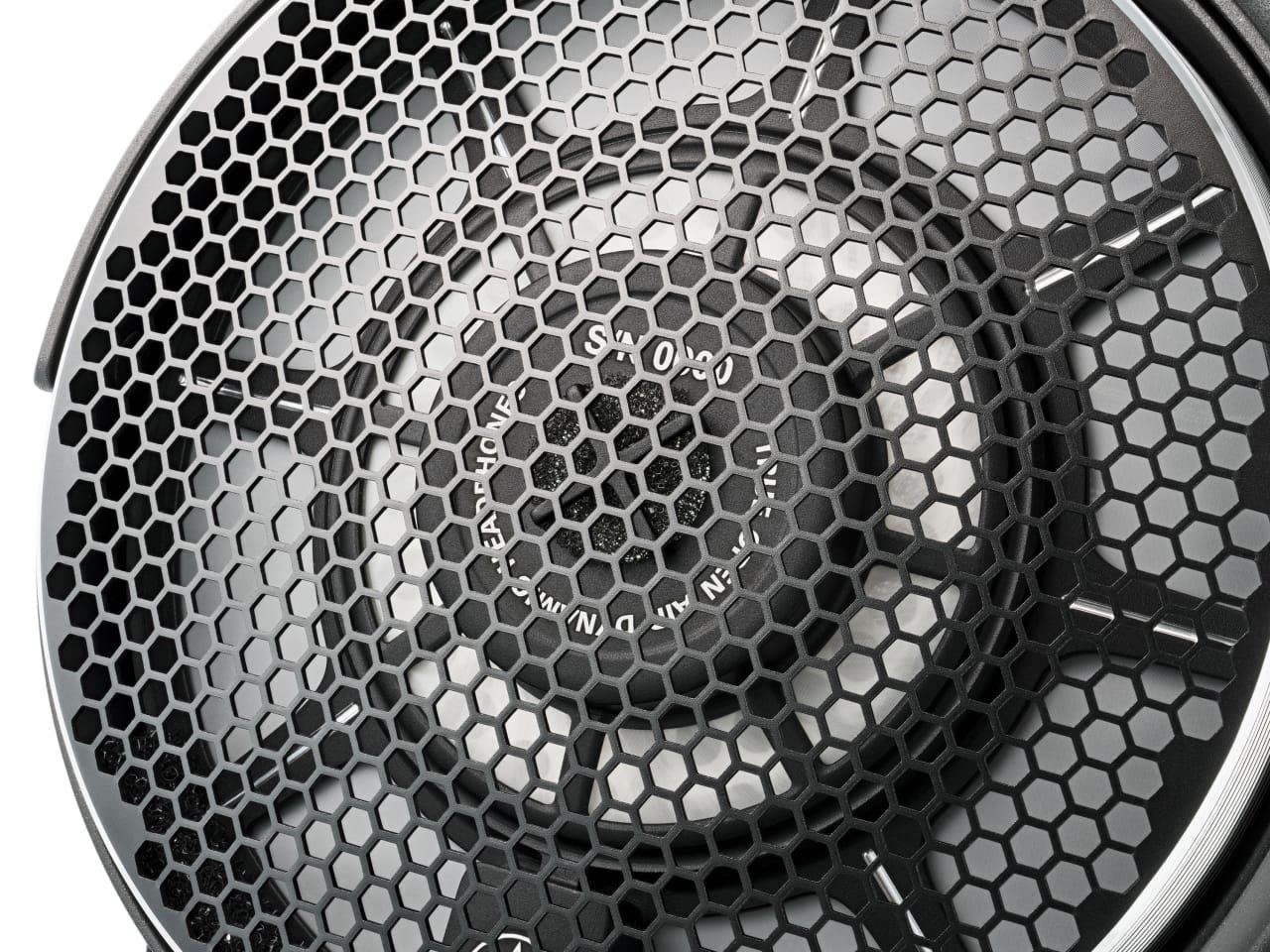 The housing also follows a similar philosophy in getting out of the diaphragm’s way: fewer obstructions, less pressure build-up, and minimal acoustic interference.
The AD7000 uses a pressed-then-punched honeycomb aluminium shell attached to a magnesium frame, which refines airflow. It’s structurally simple but surprisingly complex to execute cleanly. Most headphones punch holes into a flat sheet and bend it into shape. This introduces micro-deformations and weakens the metal. Audio-Technica shapes the shell first, then punches out the honeycombs, keeping the pattern consistent and the airflow clean.
This design also keeps the total weight down to 275 g, making these headphones featherlight for the performance class. Two sets of pads finish the picture: high-density velvet for filtering and Alcantara for a slightly different balance.
How does this fit into today’s flagship landscape?
There are many ways to skin a cat, as they say, but the experience is entirely different in every instance.
Planar magnetics chase low distortion through large, evenly-driven diaphragms; Beryllium dynamic drivers use extremely stiff domes to control breakup modes; waveguide systems sculpt airflow internally, while hybrid planar arrays push surface area and uniformity, to name a few.
Audio-Technica’s AD7000 is something of a Top Gun: Maverick moment, bringing back an old classic with new crowd-pleasing tricks. Instead of redesigning the driver around exotic materials, Audio Technica chose to revisit the idea of making the best ‘basic’ dynamic driver with the kind of tolerances and control that weren’t possible back in the day.
Whether the ADX7000’s approach becomes a new reference is for listeners to decide. But as a piece of engineering, it reminds us that good ideas are timeless — and this is what happens when you refine it with modern precision, better materials and tighter tolerances.
The ATH-ADX7000 retails at SGD 4,799 and is available through Audio-Technica Listening Tree-House at Funan, official online shop, Zeppelin & Co and Jaben.