
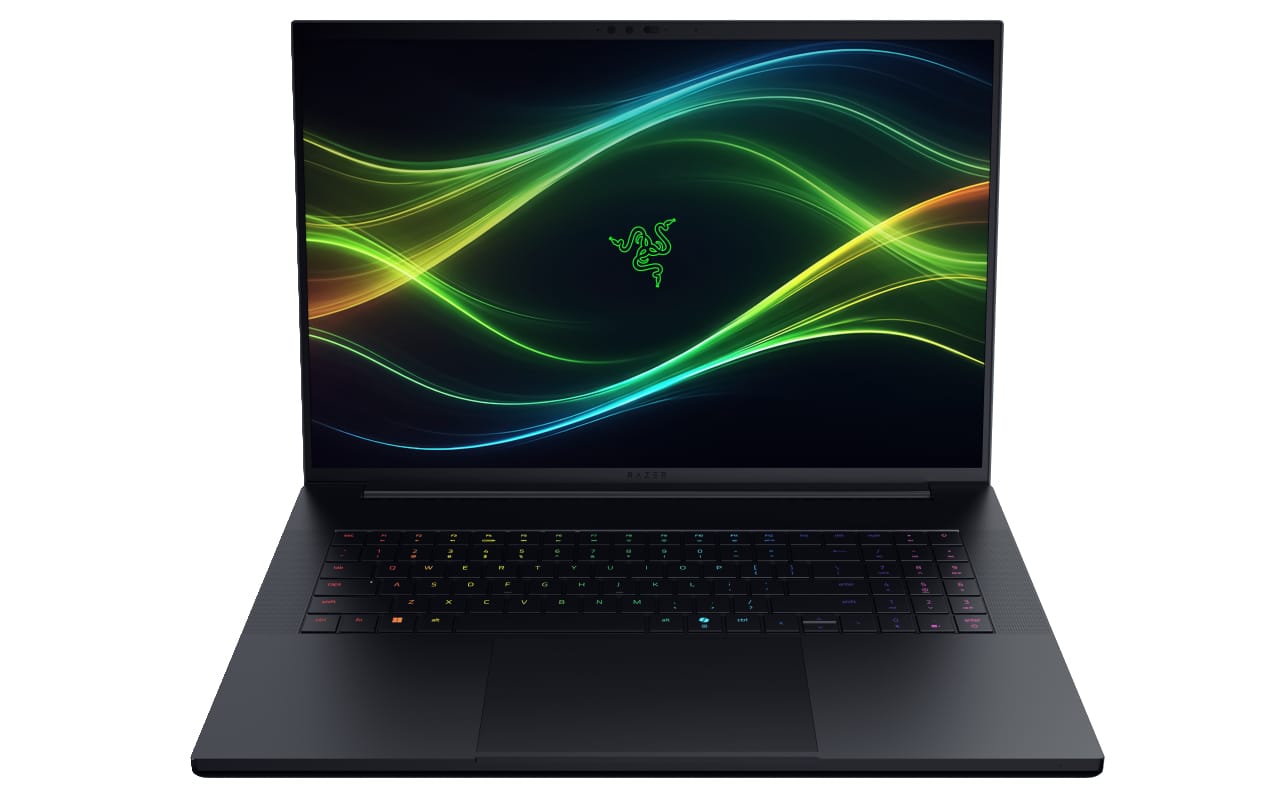
Razer is pitching the 2026 Blade 18 as its most powerful Blade yet, built for gaming, AI development with local LLMs, rendering, and creative work. While the AI angle is directionally accurate, it is more useful to see this as Razer’s refined take on the 18-inch desktop-replacement gaming laptop.
What Razer is really selling here
Top-end gaming laptops can now offer RTX 5090 laptop GPU power and 24GB of VRAM, so the Blade 18 doesn’t have any magic spec that catapults it ahead of the pack. What it does have is a compelling package: a sleek aluminium chassis, an 18-inch dual-mode display, robust desk-friendly connectivity, and enough GPU power for a secondary LLM on-device, working in tandem with cloud-based frontier AI.
In short, still a giant gaming laptop, but in a form that’s more lifestyle than gaming.
 AI is useful, but not magic
 AI is useful, but not magic
The Blade 18 can be configured with up to an Intel Core Ultra 9 290HX Plus processor, and an NVIDIA GeForce RTX 5090 Laptop GPU (175W TGP) with 24GB of VRAM, giving the Blade 18 enough headroom for useful offline AI work. Razer also lists an integrated NPU with up to 13 TOPS of AI acceleration, but that’s largely more useful for lighter background tasks such as webcam effects, noise suppression and other system-level AI processing.
Razer says the Blade 18 delivers up to 37% faster LLM inference and up to 2.2× faster image generation than a MacBook Pro M5 Max, according to its internal tests. This usually means that, apples-to-apples, the Blade 18’s advantage is clearest when an NVIDIA-friendly model fits within its 24GB of GPU VRAM. This is useful for tasks such as coding help, document summaries, drafting, automated local-file tasks, and workflow testing.
Speed is not the same as capacity
That said, local AI is a speed-and-capacity problem. While the Blade 18’s RTX GPU is fast, its useful ceiling is set by 24GB of VRAM; a high-spec M5 Max, for example, trades some raw NVIDIA acceleration for a larger shared memory pool — say 64GB or more — which can matter more when the model or context gets bigger.
To put it in context, the point of the 24GB GPU is not to run the biggest local model possible, but to make practical on-device AI fast enough to be useful alongside gaming, coding and creator work — it’s not meant to replace cloud-based frontier models, but to reduce bottlenecks by taking on smaller tasks concurrently.
Dual-mode display: speed or sharpness
That said, the hardware package is where Razer shines. Take the screen, for example. The Blade 18 uses an 18-inch dual-mode display that can switch between UHD+ at 240Hz and FHD+ at 440Hz. The first mode is for sharper work, creation and high-resolution gaming; the second is for competitive speed when frame rate matters more than detail. Razer also says the display now offers up to 100% DCI-P3 colour coverage and up to 20% higher brightness. Users get two useful modes, but no Mini LED or OLED for buyers chasing stronger HDR and contrast.
Desk-machine basics are covered
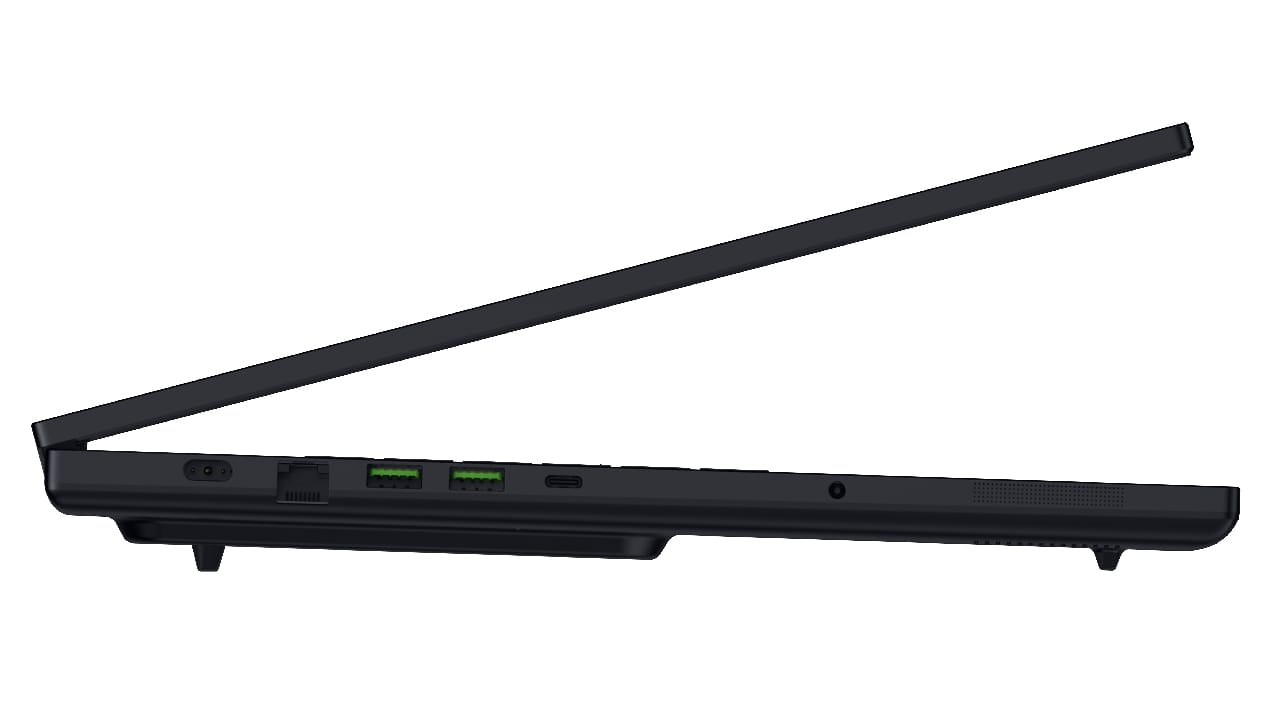 The port mix does not make the Blade 18 unique, but it does make the desktop-replacement claim easier to accept. Thunderbolt 5, Wi-Fi 7, HDMI 2.1, 2.5Gb Ethernet, UHS-II SD, and USB-C charging up to 100W give it the expected desk-machine basics, while the 5MP IR webcam, privacy shutter and six-speaker THX Spatial Audio+ setup make it feel less dependent on external accessories.
The Blade is about the polish
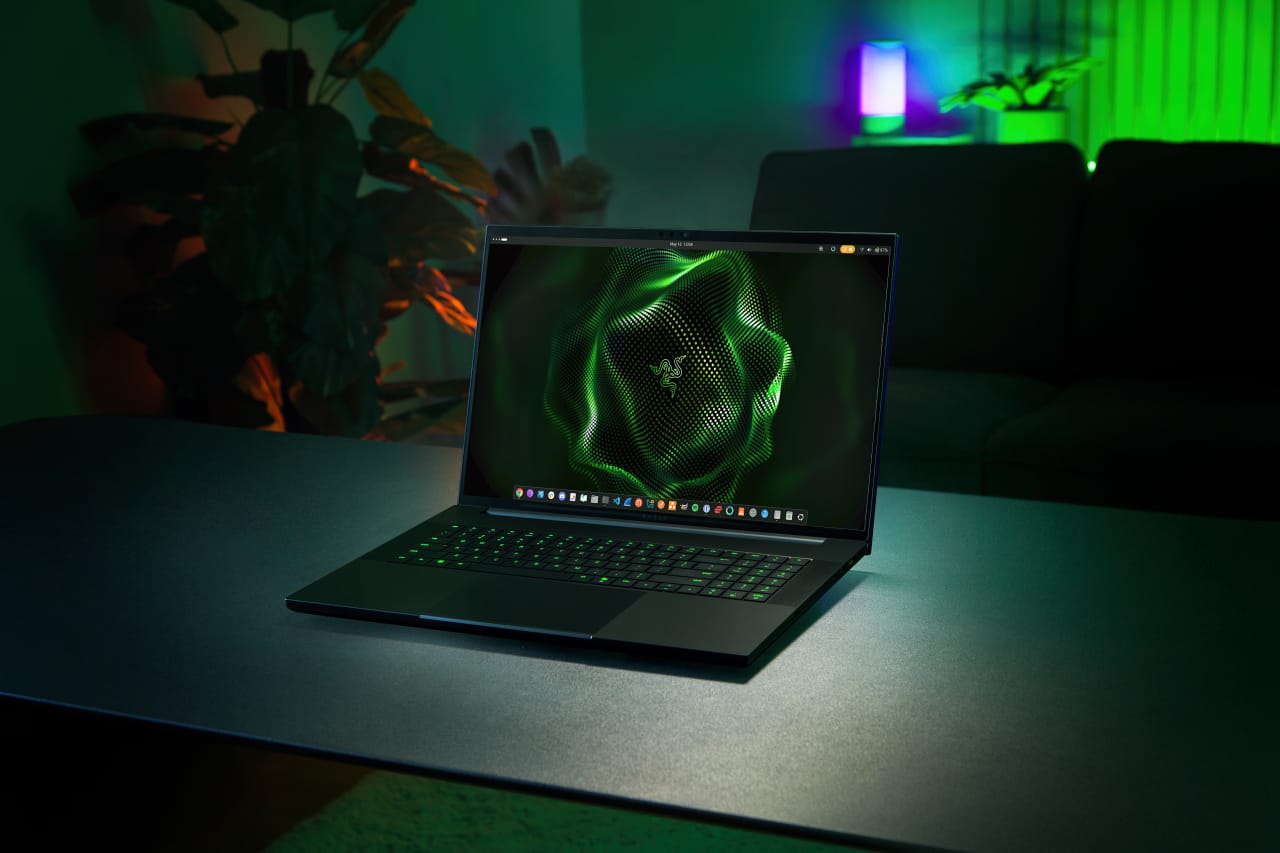 But the truth is, while marketing-speak is understandably centred around AI these days, most people buy a Razer Blade for the design language, particularly that aluminium shell — each Blade 18 is milled from a single block of aluminium. While not the most radical 18-inch desktop replacement, the Blade 18 still looks pretty much the most sophisticated version of the idea.
Still huge, still awesome, and still starting around the five grand mark — SGD 4,999 — on Razer.com and at selected RazerStores worldwide.