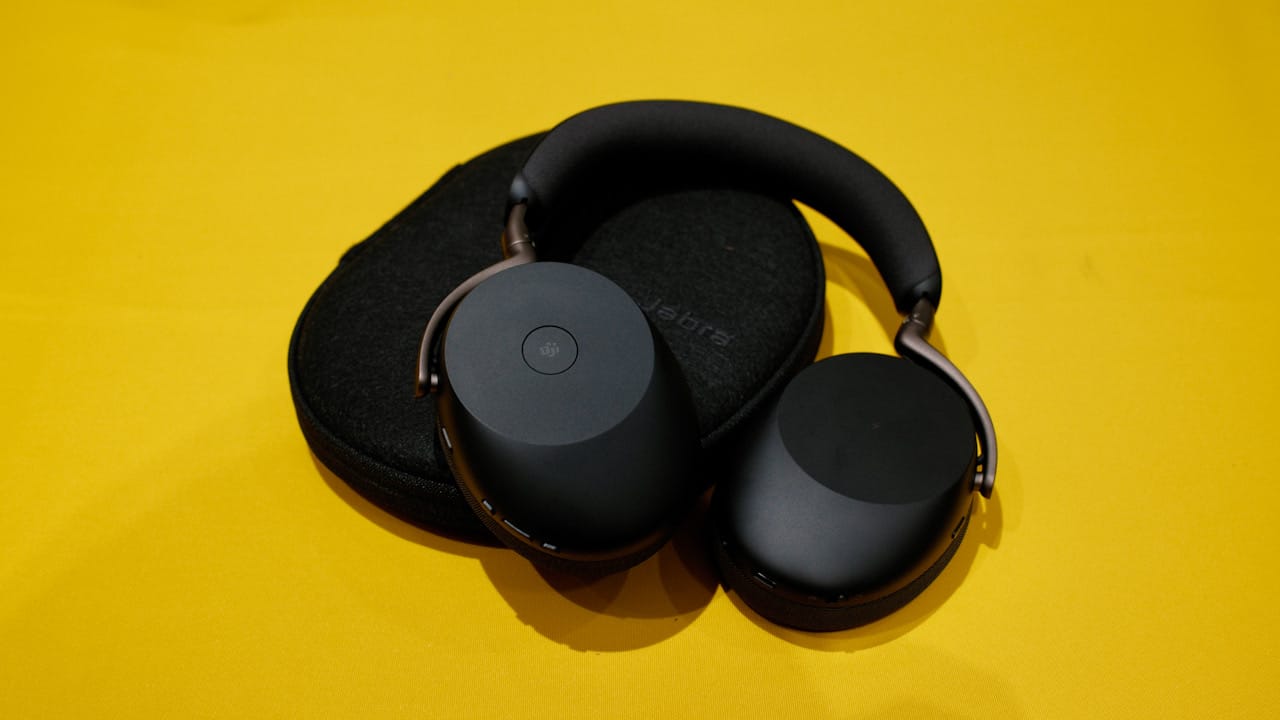
Jabra’s latest Evolve3 headset and PanaCast Room Kit don’t introduce any groundbreaking technology — unless quality of life counts as such. Instead, they bring enterprise gear closer to consumer expectations with cleaner design, easier setup, and fewer pains in everyday use.
Evolve3 — bye boom mic, clear calls now with software
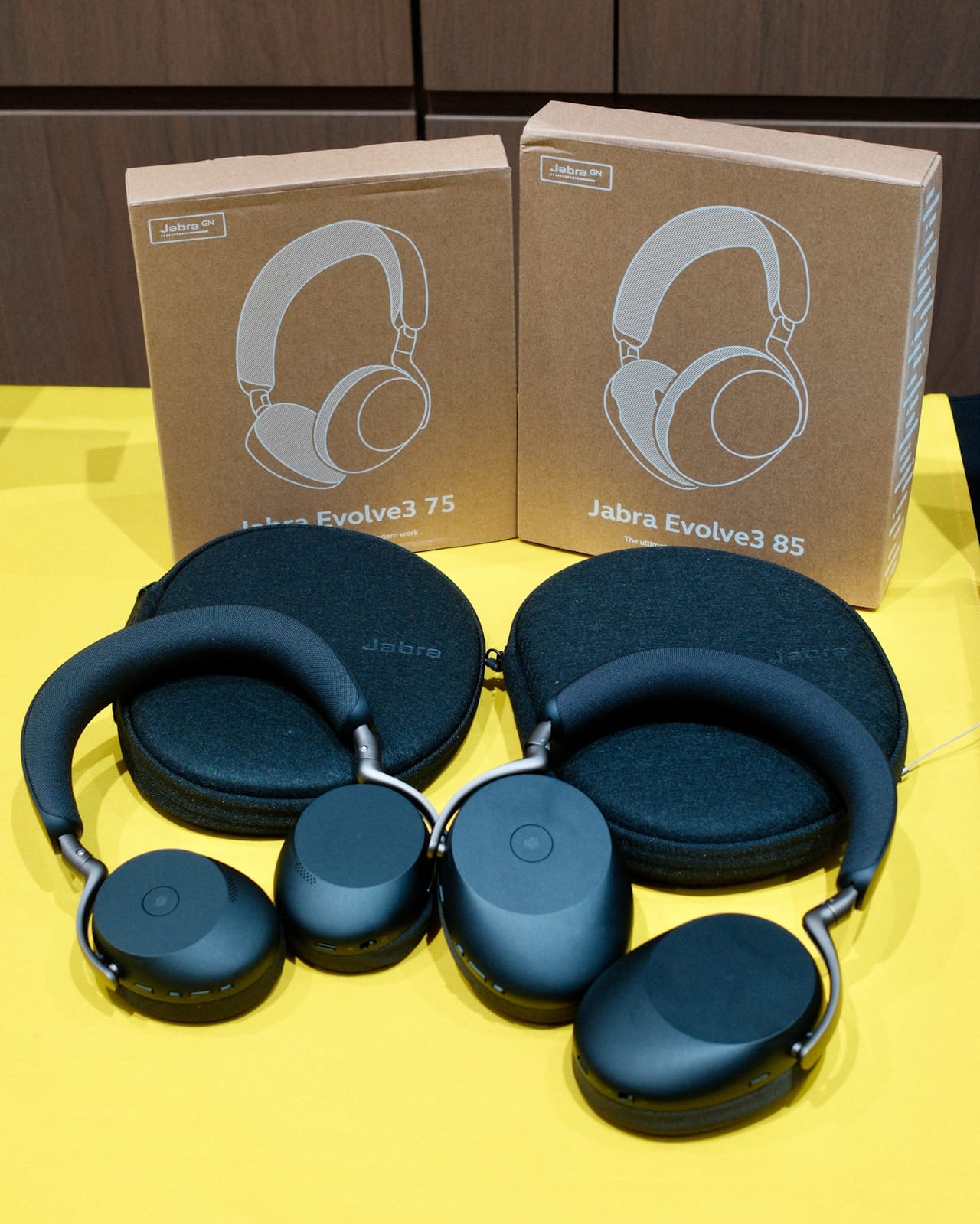 The Evolve3 series is already a big step up over the Evolve2 looks-wise. If having a boom arm makes you feel like either a call centre drone or a boomer, then the new Evolve3 will wipe the smirk off the faces of potential hecklers with aplomb. In fact, it looks somewhat similar to the Philippe Starck-designed Parrot Zik from yesteryear, with its clean lines accented by curved yokes that hug the earcups. But unlike the Zik’s techno-organic chic, the Evolve3 leans into a stylish, corporate look. Less call centre, more everyday headphones.
The boom mic hardware has been replaced by software: Jabra ClearVoice, supported by a deep neural network trained on more than 60 million real-world sentences. This AI-assisted filter improves the accuracy of separating speech from background noise and keeping the voice intelligible on the receiving end. This also improves the quality of voice input for AI-driven features and is natively optimised for Microsoft Copilot.
The over-ear Evolve3 85 is clearly geared towards better noise isolation and focus, while the on-ear 75 trades some of that for comfort and situational awareness — but it’s largely a preference at the end of the day. The difference is also reflected in their respective weights: 220g for the 85 versus 180g for the 75.
Both headphones check the expected baseline boxes for wireless headsets in 2026: adaptive ANC that stays active during calls, long battery life, and fast charging (10 hours in 10 minutes) — The Evolve3 85 is rated for up to 25 hours of call time and 120 hours of media playback, while the Evolve3 75 comes in at up to 22 hours of call time and 110 hours of playback (this is with the Busylight indicator off).
They also run on Bluetooth 5.3 with LE Audio and LC3 support alongside a Link 390 Bluetooth adapter for a more stable connection. They support multipoint connectivity for two active devices, and use a six-microphone array with AI-assisted voice pickup. Other features include HearThrough and wind noise reduction, as well as Super-wideband support for clearer call audio and Spatial Sound for a more natural listening experience. Both are UC-certified and tested across platforms like Microsoft Teams and Zoom, with dedicated controls such as a Teams button and auto-pause when removed from your head.
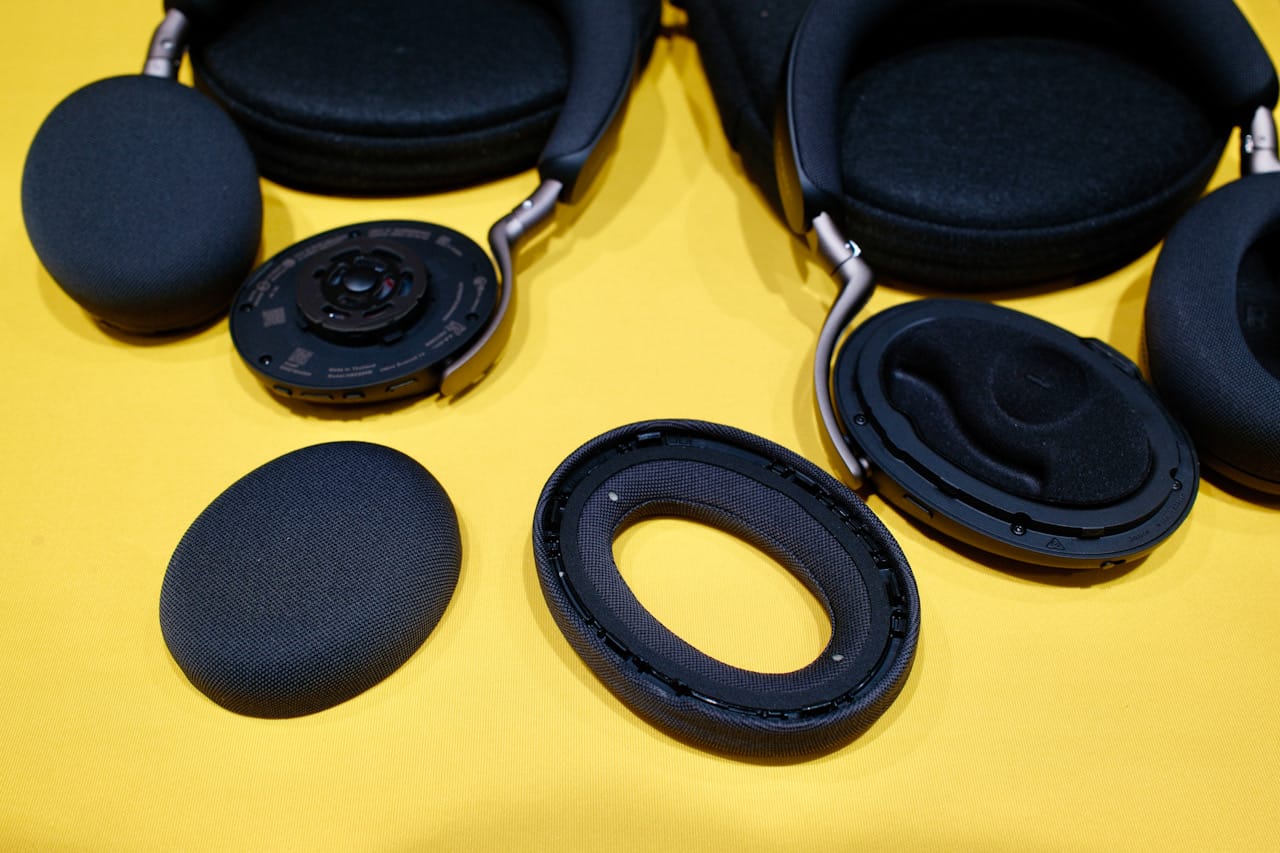 But the one real fix for long-term headaches? The fact that you can replace the earpads — now sporting a fabric rather than flake-prone synthetic leather — and the battery, on your own.
PanaCast Room Kit — turning the room into a controlled system
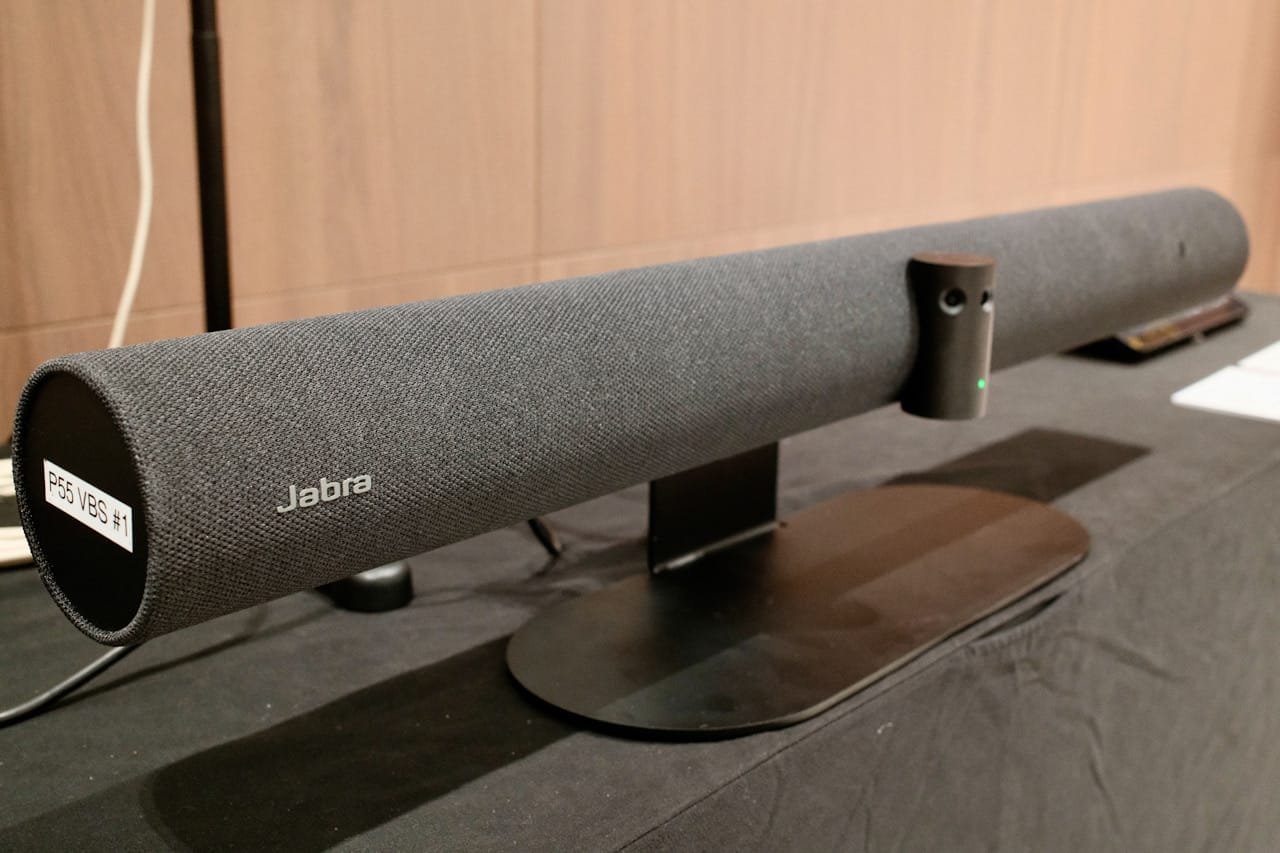 The Panacast 55 is a great one-and-done solution for small rooms, thanks to its wide viewing angles and mic coverage. So what happens if you have a larger room with more people farther from the camera? If you only have a single camera, it must either have a zoom lens or a sensor with plenty of megapixels so you can crop in more. However, at some point, the heat and the extreme processing power required make this approach counterintuitive.
This is where the PanaCast Room Kit earns its keep with its modular system. Depending on the space, configurations can range from a single PanaCast 55 to a multi-camera setup, scaling up to five Huddly Crew cameras and a second speakerphone, supporting a room of up to 22 people. The cameras and speakerphone are also powered through Power Over Ethernet, which keeps setups clean — you do need your own network switch for the cameras, though.
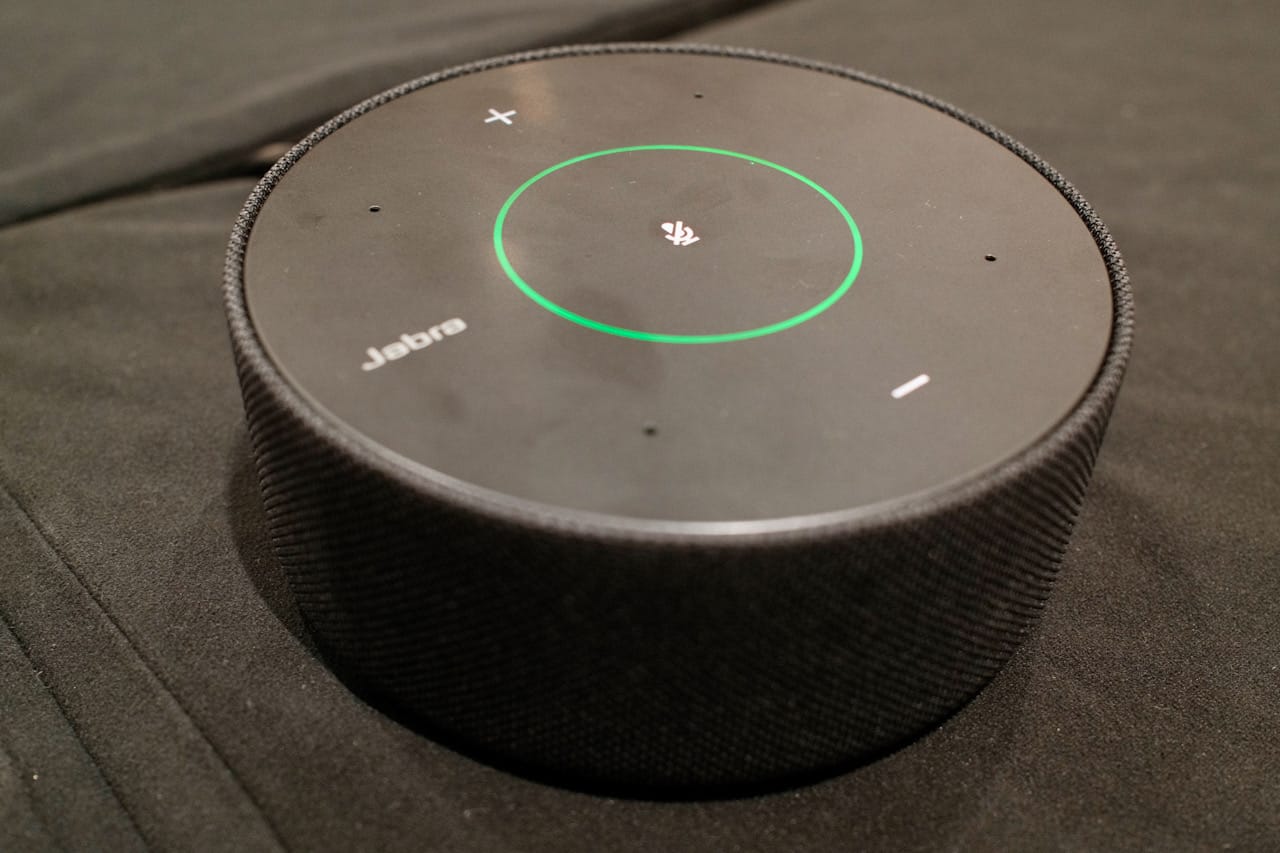 What stands out more is the use of Huddly Crew’s multi-camera logic. Rather than presenting a fixed, wide-angle view, the system continuously adjusts what remote participants see. It chooses the best available camera to track the active speaker, shifts perspective, and brings in reactions from others in the room. It’s a lot closer to a live production than your usual conferencing call, and it looks like it’s being directed in real time when in truth you ‘set and forget’.
This is possible because the satellite Huddly cameras, such as the L1, pack a high-resolution 6K sensor and 1-inch CMOS design. As such, you can place them strategically to capture multiple faces clearly across long tables without sacrificing clarity. At the same time, the additional. SpeakerMic extends audio coverage so that voices aren’t biased towards those nearest the main Panacast microphone.
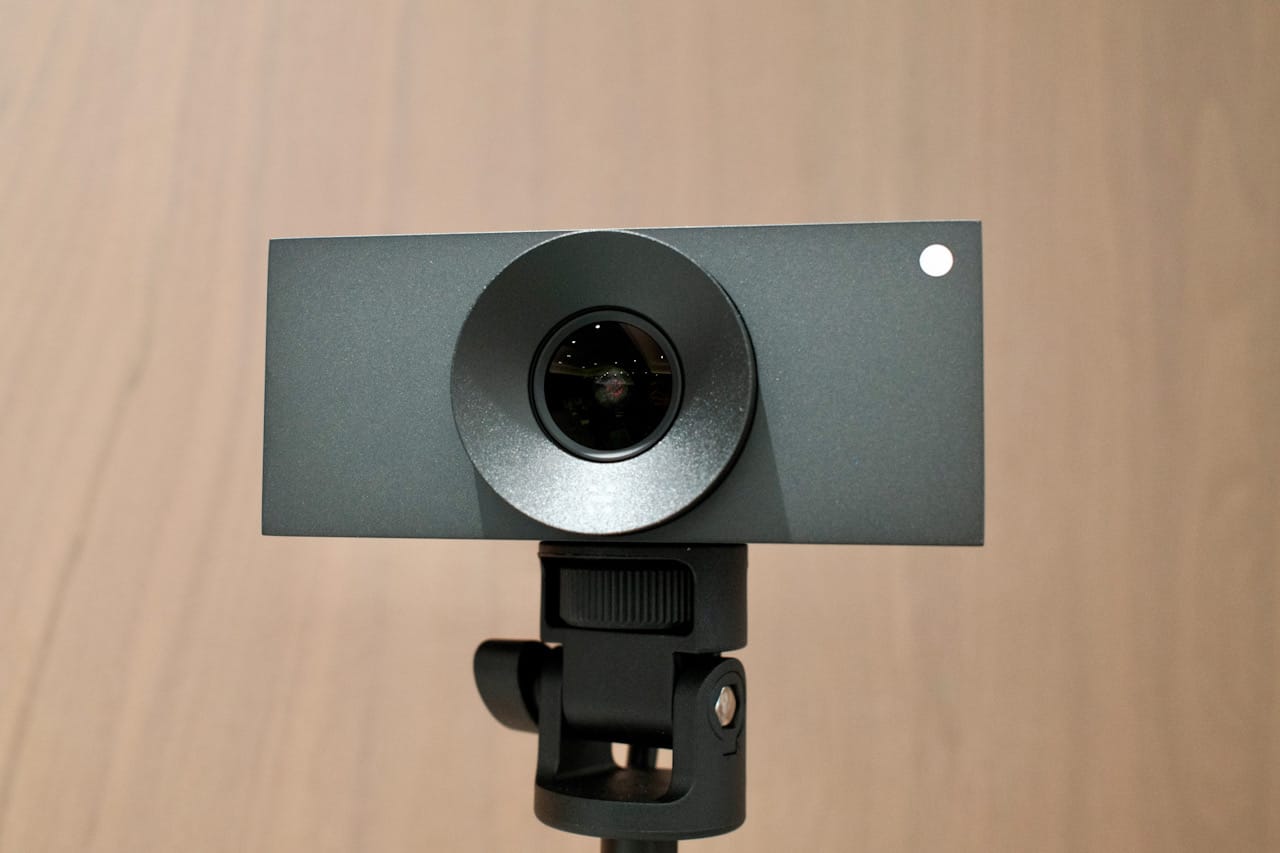 The PanaCast Room Kit was designed to be easy to deploy and scale. At the device level, the components are effectively plug-and-play, connecting over USB and Power over Ethernet with support for longer cable runs. Of course, room layout and infrastructure affect complexity, but it’s fair to say the system reduces the need for custom AV integration.
Availability in Singapore
The Jabra Evolve3 series is now available in Singapore, with the Evolve3 75 starting at SGD 688 and the Evolve3 85 from SGD 890, depending on configuration and whether a wireless charging stand is included. Both models are sold through Jabra’s official channels on Shopee and Lazada (sale prices are much lower, so keep a lookout).
The PanaCast Room Kit is expected to be available locally in Q2 2026, with pricing and configuration details to be confirmed closer to launch.
More people are returning to offices, but, much like inflation, expectations for what a call experience should be don’t wane. Making it painless to use — and less of a headache to maintain — remains high on the cards. Jabra’s new releases are a reflection of these needs.