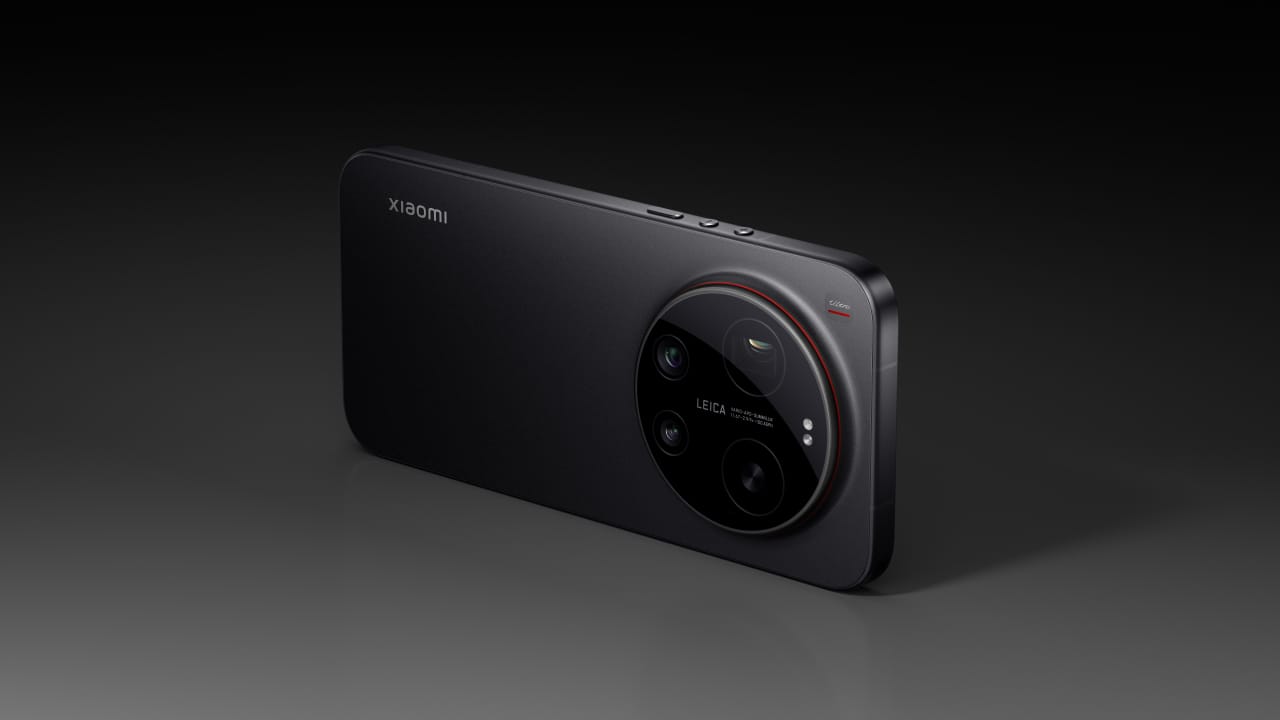
It has been roughly a decade since smartphone cameras rendered most compact digicams obsolete. In the meantime, sensors have grown larger, low-light performance has improved dramatically, and computational imaging has produced results that seemed improbable, given that the lenses were barely thicker than a coin.
That pace has slowed; sensors are already approaching the largest size practical for a smartphone — lenses are sized to match the sensor and are further constrained by the device’s thickness. Differences between flagship phone cameras are becoming harder to see from one generation to the next. Only reviewers and photographers can really spot the differences, and that’s only because they scrutinise photos all day.
The question now isn’t whether a phone can replace a camera entirely — if image quality is of utmost importance, get yourself a mirrorless camera; that much is undebatable.
The question now is how much further smartphone cameras can realistically improve.
What is new in the Xiaomi 17 Ultra camera?
Some manufacturers have responded by shifting attention toward AI features and software experiences, but Xiaomi, working with Leica, seems to be holding the course. The company continues to refine its take on the smartphone camera system — optics, sensor architecture, computational imaging, and the physical shooting experience.
The new Ultra has a more compact optical range; instead of 12mm to 120mm, it opted for a more modest 14mm to 100mm, which is more in line with classic photography focal lengths. The ultra-wide camera now sits at 14mm, paired with a 50-megapixel sensor, anchoring the wide end of the system before the camera transitions to the 23mm main sensor.
The flagship Xiaomi 17 Ultra improves image quality not through a single headline breakthrough, but through incremental engineering across the imaging stack. The main camera establishes a baseline with the new 50MP Light Fusion 1050L sensor paired with a 23mm-equivalent f/1.67 lens, but that’s far from the most interesting that they’ve done.
APO correction for telephoto
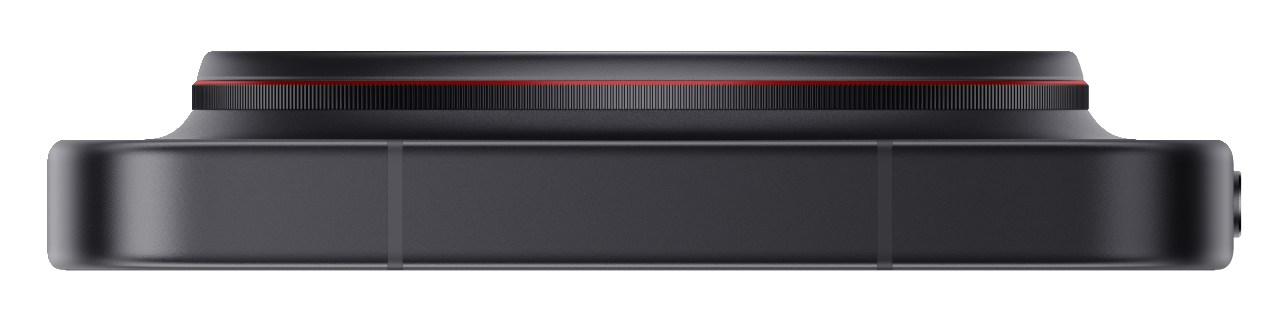 One of the low-key milestones is that we now have a phone that bears Leica’s APO designation, typically associated with Leica’s high-end photographic optics.
APO stands for apochromatic correction, a type of lens design that reduces colour fringing — the purple or green edges that sometimes appear around high-contrast subjects — often known as chromatic aberration. This happens because different colours of light bend slightly differently when they pass through a lens, causing them to focus at slightly different points. An apochromatic lens brings multiple colours of light into focus at the same focal plane, improving contrast and reducing colour artefacts.
None of this radically transforms smartphone optics — and some might argue that software processing does more — but these are precisely the types of refinements still available when the basic physics of camera design are already close to their limits.
While most people would notice subtle differences like these but find it hard to articulate them, they’re more prominent when your camera can capture more detail. In this instance, the Xiaomi 17 Ultra pairs its Leica Vario-Apo-Summilux telephoto lens with a 200-megapixel sensor, which can resolve extremely fine detail, making optical flaws such as colour fringing, softness, and other aberrations more noticeable.
Granted, Vivo X100 Ultra already did this with its 200MP telephoto, but the Xiaomi 17 Ultra goes a step further by pairing it with a true zoom mechanism.
Telephoto design: combining optics with computation
Instead of stacking several telephoto cameras with fixed focal lengths and relying on sensor cropping to fill the gaps between them, the Xiaomi. 17 Ultra uses a floating-lens design that shifts the lenses as the focal distance changes within a 75-100mm focal range — roughly 3.3x to 4.3x magnification relative to the 23mm main camera. Optical image stabilisation (OIS) helps counteract small hand movements that become far more noticeable when zooming in.
It’s a relatively narrow range, but filled with popular options for portraiture, with 75, 85, 90 and 100mm associated with key lenses in the photographic world. They generally offer a natural perspective without pushing the camera into extreme zoom, which also makes it hard to keep the camera steady.
Beyond the 100mm range, the 200MP sensor provides enough detail for cropping, allowing the camera to extend further into telephoto territory while retaining usable image quality, making it a better foundation for computational cleanups, too.
Sensor engineering: a 1-inch LOFIC camera sensor
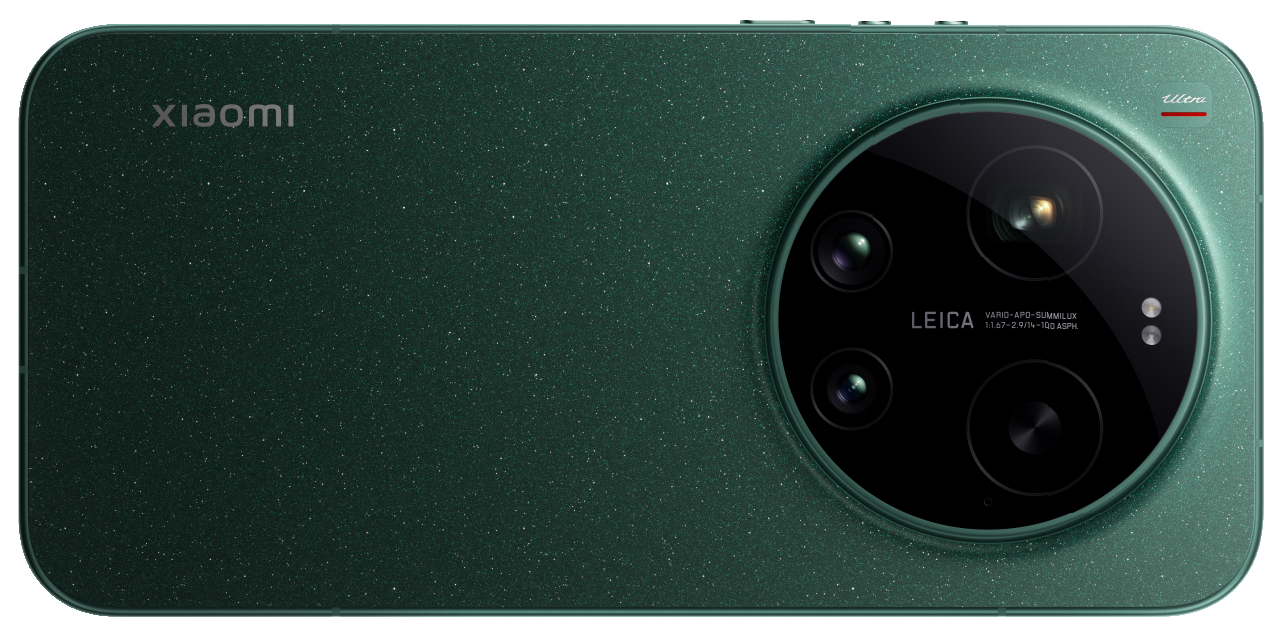 The Xiaomi 17 Ultra uses the Light Fusion 1050L, a 1-inch sensor built around LOFIC (Lateral Overflow Integration Capacitor) architecture, for its main camera. The standard Xiaomi 17 instead uses the smaller Light Fusion 950 sensor (1/1.31-inch), a scaled-down version of the same imaging platform. It doesn’t have LOFIC, though.
LOFIC sensors help the camera handle bright highlights by giving each pixel extra capacity to store light information. In high-contrast scenes, especially those with bright sunlight casting deep shadows in the frame, this lowers the risk of bright areas clipping to pure white, improving highlight detail and overall dynamic range. It reduces reliance on multi-frame HDR, which most smartphone sensors depend on to recover highlight detail.
HDR combines several exposures to recover detail, whereas LOFIC captures more of that information in a single exposure. Not only does LOFIC look more natural than typical HDR highlight rendering, but it also helps avoid artefacts such as ghosting.
The main wide-angle camera on the 17 series does quite a bit of heavy lifting through digitally cropping, essentially covering 23-75mm on the Ultra and 23-60mm on the regular 17. But at 2x (46mm) zoom, they safely cover the standard focal length zone (43-50mm), so you’re more or less covered there.
Video pipelines approaching professional workflows
The Xiaomi 17 series also supports ACES Log recording, a colour workflow widely used in professional film production. Combined with Dolby Vision HDR capture, this helps the video retain more colour and highlight detail during editing.
Unlike many smartphone Log modes that rely on proprietary colour curves, ACES is designed to integrate with standard post-production pipelines used in film and television.
The camera system supports 8K recording at 30 frames per second, while the Ultra models extend this with 4K recording at up to 120fps for slow-motion capture. Together with Xiaomi’s computational video processing and HDR capture, this places the phones closer to the workflows used in professional content creation.
Xiaomi 17 — the everyday flagship
The standard Xiaomi 17 is the most balanced phone in the lineup. It keeps the core elements of Xiaomi’s new imaging platform — including the Light Fusion sensor architecture — while packaging them in a more compact and conventional flagship design.
Compared with the Ultra models, it avoids the larger camera module and heavier body that come with Xiaomi’s more ambitious photography hardware. Instead, the Xiaomi 17 focuses on delivering strong overall performance, capable imaging and long battery life in a device that remains comfortable to carry and use daily.
The phone features a 6.3-inch OLED display with adaptive refresh, is powered by the Snapdragon 8 Elite Gen 5 chipset, and is paired with a 50-megapixel Light Fusion 950 main camera. Despite the large 6,330mAh battery, the device remains relatively light at 191g, reinforcing its positioning as the more practical everyday flagship.
Get this if: you want a powerful flagship with strong camera performance in a more compact, everyday form factor.
Xiaomi 17 Ultra — the camera-first flagship
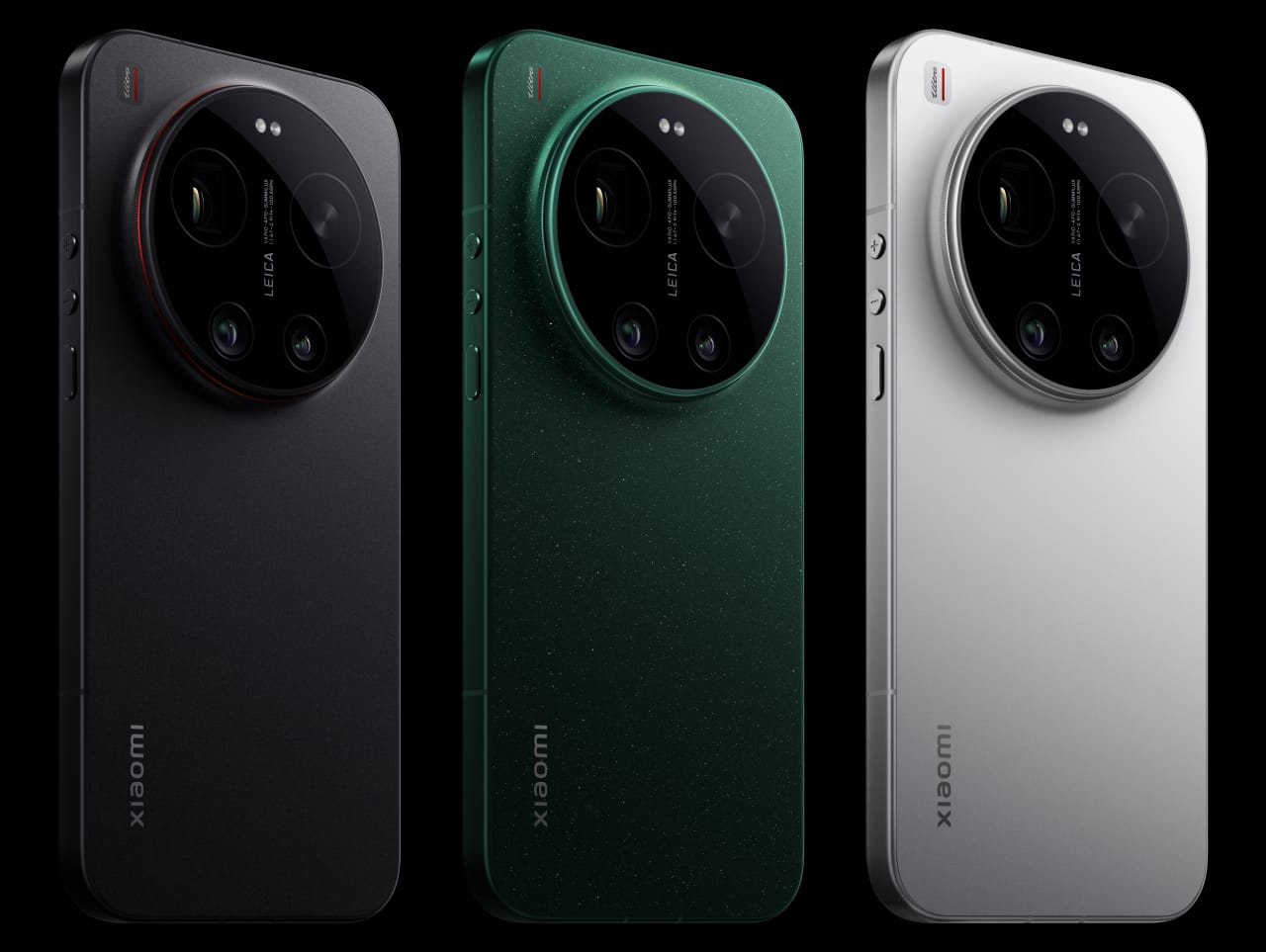 The Xiaomi 17 Ultra is where the company’s camera ambitions are most visible. Its hardware is built around the larger one-inch Light Fusion 1050L sensor, complemented by the advanced telephoto optics mentioned earlier.
Naturally, that camera hardware takes up space. The 6.9-inch Ultra features a 3500-nit OLED display, keeping the camera preview visible even in bright outdoor light. The phone weighs around 218g, noticeably heavier than the standard offering. Its battery is slightly smaller at 6,000mAh, likely because internal volume has been partitioned to support the larger camera module and zoom optics.
The device also supports Xiaomi’s Photography Kit accessory, a grip that adds physical camera controls, a shutter button and additional battery capacity. Together, these elements push the phone closer to the experience of using a compact camera.
Get this if: smartphone photography is your main priority and you want Xiaomi’s most capable camera system.
Leica Leitzphone — the Leica collector’s edition
The Leica Leitzphone shares much of its core hardware with the Xiaomi 17 Ultra, but is essentially the luxury option that showcases Leica’s design language and shooting philosophy.
Elements such as the Leica camera ring, Leica-styled interface and distinctive industrial design aim to recreate aspects of the traditional Leica camera experience on a smartphone. As the underlying camera hardware is similar to the Ultra, the differences are largely aesthetic and experiential rather than technical.
The Leitzphone is also offered in a 1TB storage configuration and weighs slightly more than the Ultra at around 223g.
Get this if: you value Leica’s design and heritage and want the Ultra’s camera hardware presented through Leica’s aesthetic.