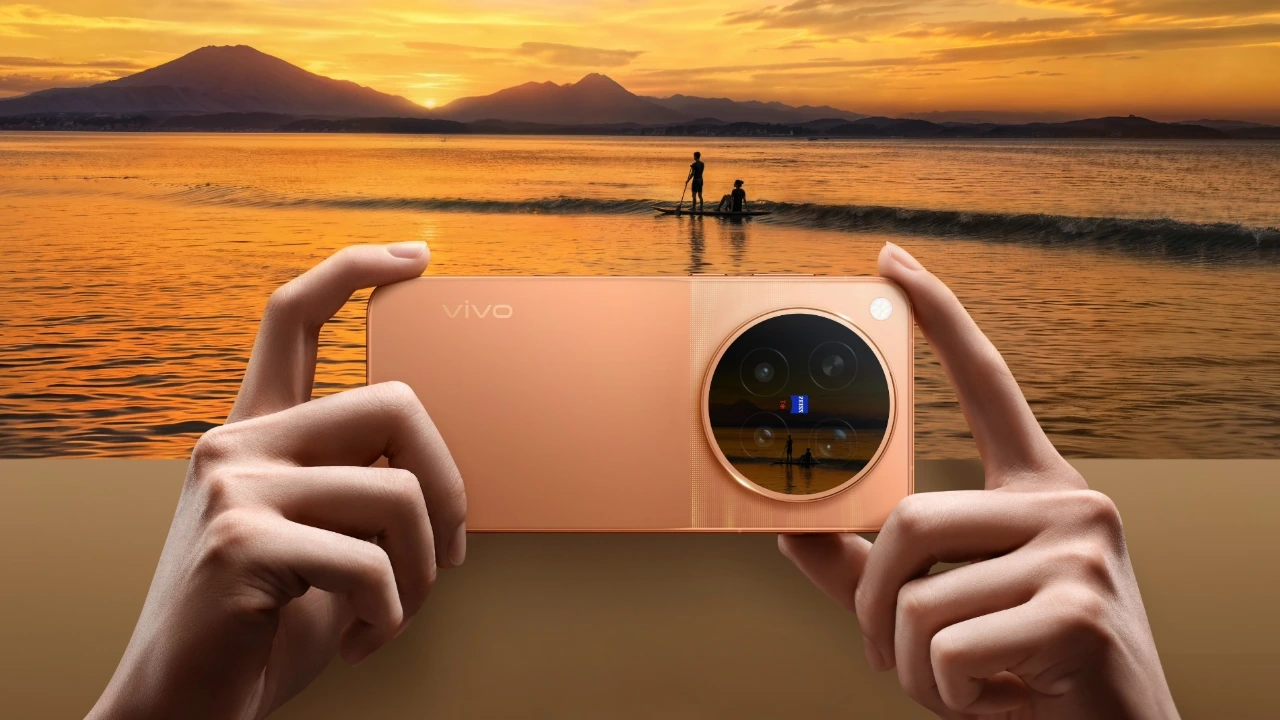
The vivo X500 launches at SGD 700 more than the previous X300 (SGD 1,299), while the X500 Pro Max costs SGD 2,499 — the same as last year’s X300 Ultra, except the Ultra came with 16GB of RAM and 1TB of storage, versus the Pro Max’s 12GB and 512GB.
For that sort of money, you’d expect some pretty spectacular camera upgrades. Instead, the X500 Pro Max keeps the X300 Ultra’s 200MP ZEISS APO telephoto camera, but its main camera has dropped from 200MP to 50MP. Granted, the Pro Max isn’t a direct replacement for the Ultra, but it doesn’t quite have the kind of specs that make you reach for your wallet.
So what exactly has vivo been working on? Much of the development appears to be happening beneath the surface, particularly in how the cameras capture and process images. Let’s break it down.
HIGHLIGHTS
More than megapixels
Vivo's latest flagships put more emphasis on autofocus, stabilisation and moving-image processing than headline camera resolution. Whether that justifies their prices remains to be seen.
- X500 · CAMERAS
- 50MP main + 64MP ZEISS APO telephoto
- X500 PRO MAX · CAMERAS
- 50MP main + 200MP ZEISS APO telephoto
- X500 PRO MAX · TRACKING
- 60fps AF tracking
- X500 PRO MAX · VIDEO
- Native 4K 240fps
- X500 · BATTERY
- 7,500mAh
- X500 PRO MAX · BATTERY
- 7,800mAh
Improving telephoto tracking
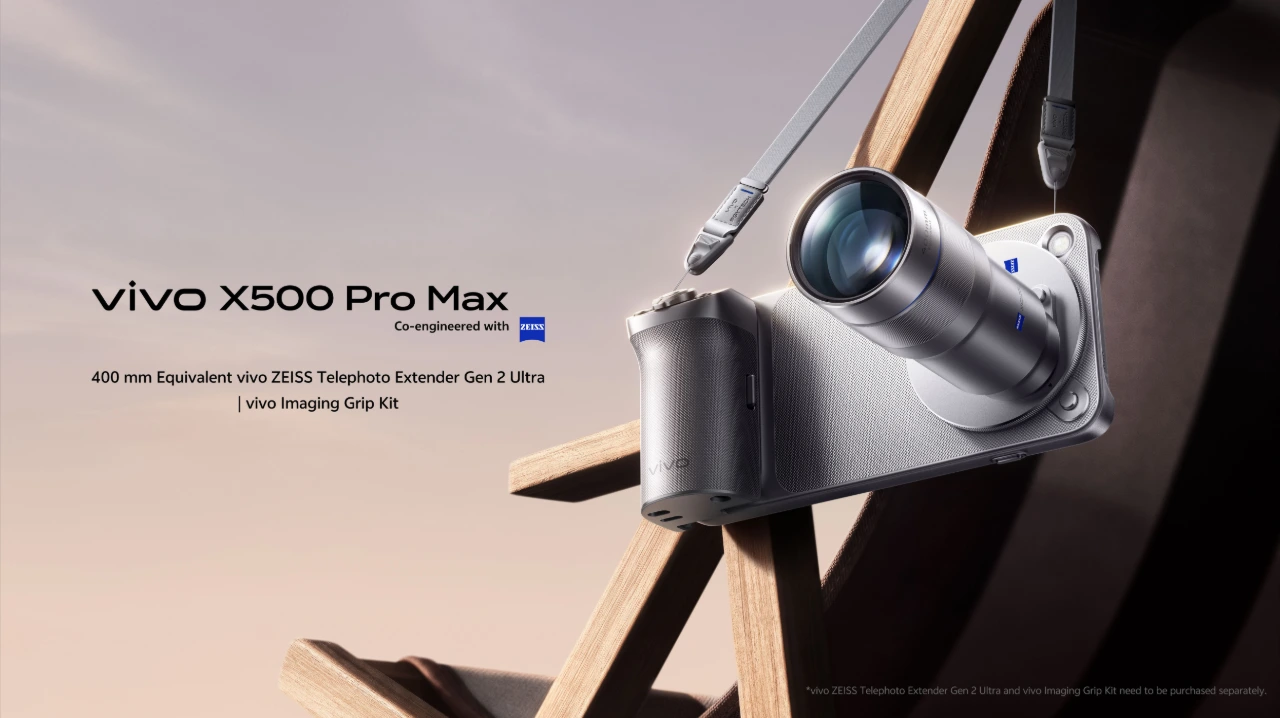
The optional 400mm telephoto extender for the vivo X500 Pro Max. vivo
The X500 Pro Max inherits the X300 Ultra’s 200MP ZEISS APO telephoto camera, with its 85mm equivalent focal length and 1/1.4-inch sensor. An optional telephoto extender takes that reach to 400mm equivalent.
That’s plenty of reach, but it doesn’t help much if your subject moves out of focus before you get the shot. Vivo’s X-Track Engine tackles that problem with 60fps autofocus tracking in supported modes. It also supports capturing moving subjects at up to 30x zoom and recording 4K 120fps video with continuous autofocus tracking. Specialised modes for concerts and long-range shooting offer 4K 60fps recording, with an emphasis on keeping moving subjects in focus.
The interesting part is the ‘boring’ stuff happening under the hood. In addition to the Dimensity 9600 Pro, which incorporates Imaging NPU 2.0 to accelerate imaging calculations, vivo introduced what it calls the industry’s first 1,536-point multi-zone laser autofocus system, which provides more granular depth information across the frame. Both are intended to improve subject tracking, particularly at longer focal lengths. Whether they deliver noticeably more reliable autofocus is something we’ll have to establish through testing.
Fewer megapixels, but not a compromise
While the X500 Pro Max isn’t a replacement for the X300 Ultra, you can’t help but notice that vivo has opted for a 50MP, 1/1.28-inch Sony LYTIA L910 main camera sensor developed with Sony, versus the Ultra’s 200MP main camera.
The changes and upgrades appear to be focused on improving image quality in challenging lighting conditions, particularly at night. Think of a singer under powerful stage lights, or a brightly illuminated street against a dark background. Ideally, you want detail in both the highlights and shadows, without excessive noise.
Vivo approaches this from both ends. The sensor uses LOFIC (Lateral Overflow Integration Capacitor) technology to capture excess charge that would otherwise be lost when bright areas become overexposed, preserving highlight detail. But the additional charge-storage and readout circuitry can complicate noise control.
Vivo claims its new sensor achieves readout noise as low as 0.75 electrons, compared with 1.5–2 electrons for comparable flagship sensors. Lower readout noise helps preserve faint information in darker areas, complementing LOFIC’s ability to retain highlights.
The new pipeline claims to deliver up to 17 EV of dynamic range — the difference between the brightest and darkest details it can capture — when recording video with the main camera in Log mode. Casual users are unlikely to use this mode, but it preserves tonal information for greater flexibility when manually adjusting exposure and colour.
There’s also 3° gimbal-grade optical image stabilisation to compensate for camera shake, while video capabilities include native 4K 240fps slow motion and 4K 120fps recording with autofocus tracking.
Collectively, the aim is to preserve more usable image information rather than simply capturing more pixels. That said, this approach is not unfamiliar to flagship smartphones these days.
Bigger batteries, plus OriginOS 7
At least the battery upgrades are easier to quantify. The X500 Pro Max gets a 7,800mAh battery, nearly 20% larger than the X300 Pro’s 6,510mAh. The regular X500 has a 7,500mAh battery, up from 6,040mAh on the X300 — roughly 24%. Both support 90W wired and 40W wireless charging. While bigger batteries don’t automatically mean proportionately longer battery life, the capacity increases are substantial.
OriginOS 7 adds floating-window multitasking, AI-assisted recording summaries and expanded interoperability with Apple devices. This includes file sharing with compatible iPhones, Mac connectivity through vivo Office Kit, iCloud access and limited Apple Watch integration. However, you’ll still need an iPhone to pair and activate the watch first.
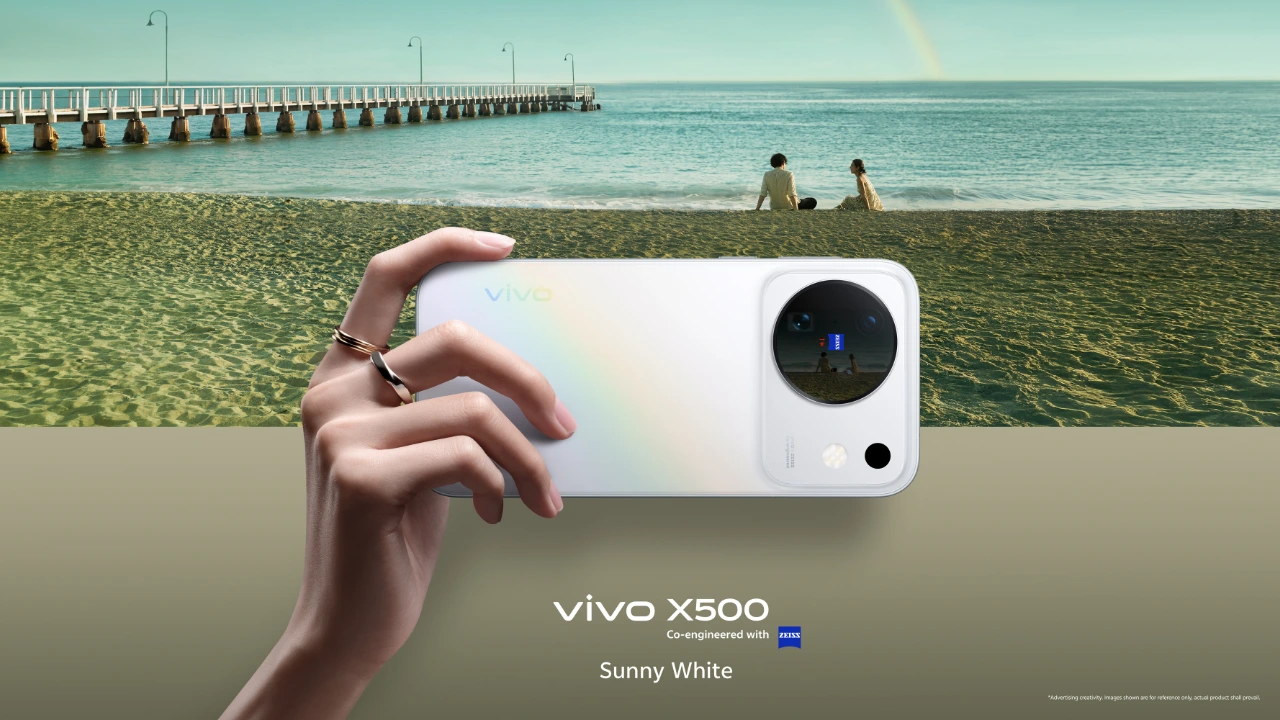
The vivo X500 in Sunny White. vivo
Camera-wise, the regular X500 inherits the X300 Pro’s Sony LYTIA 828 main sensor, not the Pro Max’s newer L910. Its 50MP, 1/1.28-inch main camera offers 1.2° optical stabilisation and is paired with a 72mm equivalent, 64MP ZEISS APO telephoto camera.
There’s support for the optional 200mm telephoto extender, multi-focal 4K 120fps video, cinematic recording modes and automatic framing. However, the X500 runs on the Dimensity 9600M rather than the Pro Max’s Dimensity 9600 Pro. It also lacks some advanced camera features, including the 1,536-point laser autofocus system, 4K 240fps slow motion, and 3° optical stabilisation. However, it still supports 4K 120fps video, concert-focused shooting modes and automatic subject framing.
Singapore pricing and availability
The vivo X500 series goes on sale in Singapore on 31 October 2026, with pre-orders running from 20 to 30 October.
Model | RAM/storage | Retail price | Pre-order price |
|---|---|---|---|
vivo X500 | 12GB/512GB | SGD 1,999 | SGD 1,799 |
vivo X500 Pro Max | 12GB/512GB | SGD 2,499 | SGD 2,299 |
Pre-orders placed by 30 October receive a SGD 200 discount. Vivo is also offering a complimentary 200mm telephoto extender and case, valued at SGD 399, while stocks last. The 400mm extender for the Pro Max is sold separately.
Other advertised benefits include three months of Google AI Pro with 5TB cloud storage (valued at SGD 87), two years of international warranty coverage (SGD 129) and three months of screen protection (SGD 199). An additional SGD 50 trade-in bonus is offered from 1 to 30 November, while a Jay Chou gift box (SGD 69) is exclusive to in-store purchases. Promotional eligibility and redemption conditions may apply.
Pre-orders are available through vivo Experience Stores, Shopee, Lazada, TikTok and authorised retailers including Challenger, Best Denki, Courts, Harvey Norman and Gain City. Singtel pre-orders begin on 23 October. General sales start on 31 October through authorised retailers and participating telco partners.
More information is available on vivo’s official X500 and X500 Pro Max product pages.
Whether those improvements prove worth paying for is another matter, but at least we have a clearer idea of what vivo has been working on.
SUMMARY OF KEY SPECS
vivo X500 vs X500 Pro Max
| vivo X500 | vivo X500 Pro Max | |
|---|---|---|
| Software | OriginOS 7 | OriginOS 7 |
| Processor and storage | Dimensity 9600M; 12GB RAM and 512GB storage (Singapore configuration) | Dimensity 9600 Pro; 12GB RAM and 512GB storage (Singapore configuration) |
| Display | 6.59-inch 1.5K LTPS; up to 144Hz; claimed 4,000-nit local peak brightness | 6.85-inch 2K; 1–144Hz; claimed 4,400-nit local peak brightness |
| Main camera | 50MP Sony LYTIA 828; 1/1.28-inch; f/1.68; 23mm equivalent; 1.2° OIS | 50MP Sony LYTIA L910; 1/1.28-inch; f/1.57; 24mm equivalent; 3° OIS |
| Telephoto camera | 64MP Sony LYTIA 610; 1/2.0-inch; f/2.55; 72mm equivalent | 200MP HP0; 1/1.4-inch; f/2.67; 85mm equivalent; CIPA 7.0 stabilisation |
| Ultra-wide camera | 50MP JN1; 1/2.76-inch; f/2.0; 15mm equivalent | 50MP JN5; 1/2.75-inch; f/2.0; 15mm equivalent |
| Front camera | 50MP JN1; 20mm equivalent; autofocus | 50MP JN1; 20mm equivalent; autofocus |
| Video and tracking | Multi-focal 4K 120fps video; cinematic colour and portrait video; auto framing | Native 4K 240fps; 4K 120fps Pro AF Tracking; 17 EV TrueDynamic Log; 60fps AF tracking on main and telephoto |
| Battery and charging | 7,500mAh; 90W wired; 40W wireless | 7,800mAh; 90W wired; 40W wireless |
| Build | 157.01 × 74.49 × 8.15mm; 211–213g depending on colour | 163.32 × 76.82 × 8.12mm for listed Singapore colours; 229g |
| Durability | IP68/IP69 dust and water resistance | IP68/IP69 dust and water resistance; ultra-hard anti-reflective lens coating |
| Security | 3D ultrasonic fingerprint sensor | 3D ultrasonic fingerprint sensor |
| Connectivity | Wi-Fi on 2.4/5/6GHz bands; Bluetooth 6.0; NFC; USB 3.2 | Wi-Fi on 2.4/5/6GHz bands; Bluetooth 6.0; NFC; USB 3.2 |
| Singapore colours | Dusk Black; Sunny White | Sunset Orange; Starry Grey |
| Retail price | SGD 1,999 | SGD 2,499 |
| Pre-order price | SGD 1,799 | SGD 2,299 |