On paper, Alibaba Cloud’s latest Singapore AI initiative looks pretty modest. Effectively, it is a commitment to support more than 1,000 SMEs and students as part of Singapore’s broader push to encourage the adoption of generative and agentic AI.
Announced alongside Alibaba Cloud’s first international Qwen Conference outside China and held in Singapore, the initiative with NTUC’s Tech Talent Assembly and ST Telemedia Global Data Centres provides tokens and hands-on workshops to guide participants in using Alibaba Cloud’s AI tools to solve real-world problems.
It will start with up to 200 employees from NTUC Union Companies before expanding to partners, including IMDA’s Digital Enterprise Blueprint-Alibaba Cloud Digital Accelerator Programme, SGTech, Singapore Computer Society, Digital Defenders Alliance Singapore and Institutes of Higher Learning.
Effectively, Alibaba Cloud is putting skin in the game by getting future users to try its tools early, rather than waiting for them to discover Qwen only after they have already standardised around someone else’s agentic AI stack.
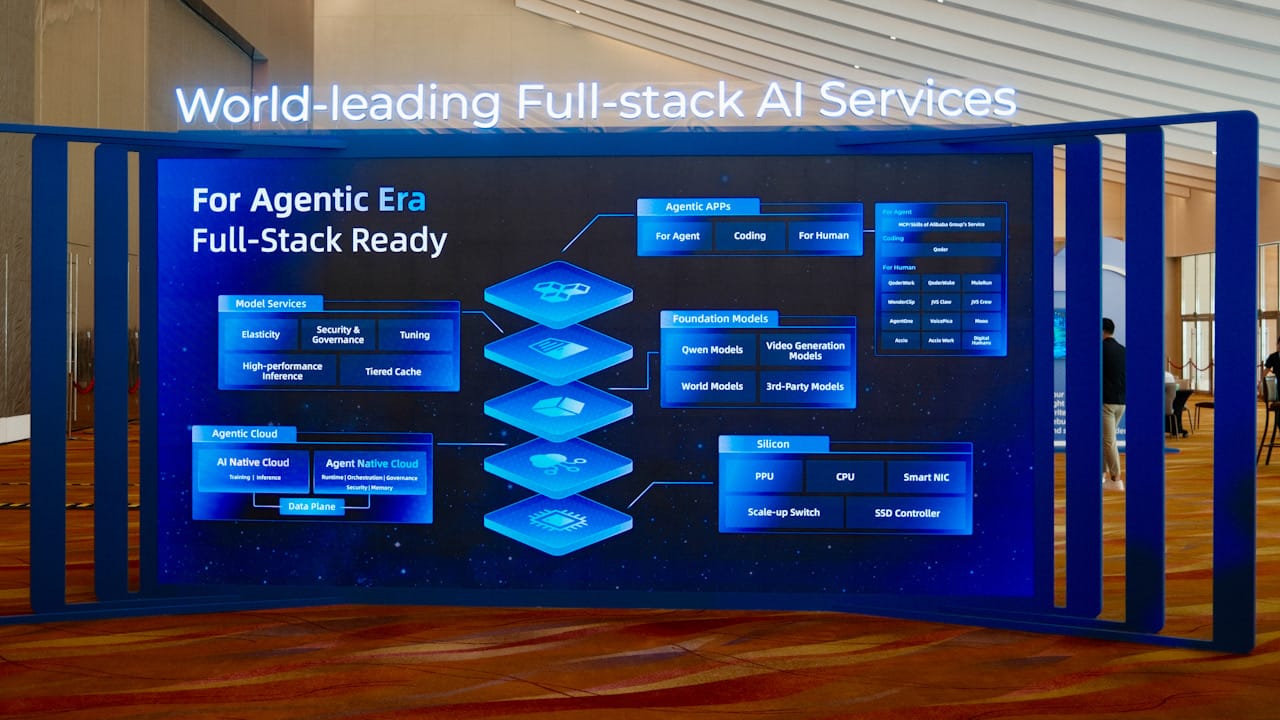
What may be less obvious is that Alibaba is not coming at this with just a model. Like Google, it has enough of the surrounding machinery — models, cloud infrastructure, developer tools, agent Skills and deployment products — to argue that it can help users move from experimentation to actual agentic workflows.
Alibaba’s play: Qwen as the agentic AI bridge
Let’s face it; Qwen is not usually the first word to roll off the tongue when it comes to language models. But it’s one of the few that offers a wide range of models ranging from frontier to open source. And with the latest announcements, it’s clear that Alibaba wants Qwen to become the bridge from open-source AI experimentation to enterprise-ready agents.
The AI race is quickly moving beyond chatbots and the question now is who can make it easier for developers, startups and businesses to move from model access to working agents; systems that can call tools, operate across workflows, interact with cloud resources and execute multi-step tasks without every team — or individual — having to figure out how to assembling the whole stack themselves. In other words, they’re trying to make the early chaos of agentic AI less messy.
Qwen3.7-Max is optimised for agent work
At the heart of its announcements is Qwen3.7-Max, its frontier model that has been trained and optimised for agentic AI, such as the ability to run long processes with minimal performance degradation — Alibaba Cloud cites a 35-hour horizon without drifting or losing context.
The new model is also touted to have an Artificial Analysis’ Intelligence Index of 56.6, placing it fifth and just a shade behind — GPT 5.5 holds a slender lead at the top with 60.2 — the current leaders, while leading the pack in other areas like Apex Math Reasoning (test for agentic style executions) with 46.8.
The model also natively supports the Model Context Protocol (MCP), enabling seamless integration with popular systems such as OpenClaw, Hermes Agent, Claude Code, Qwen Paw, and Alibaba Cloud’s flagship IDE, Qoder.
Qwen Cloud makes it easier to get started
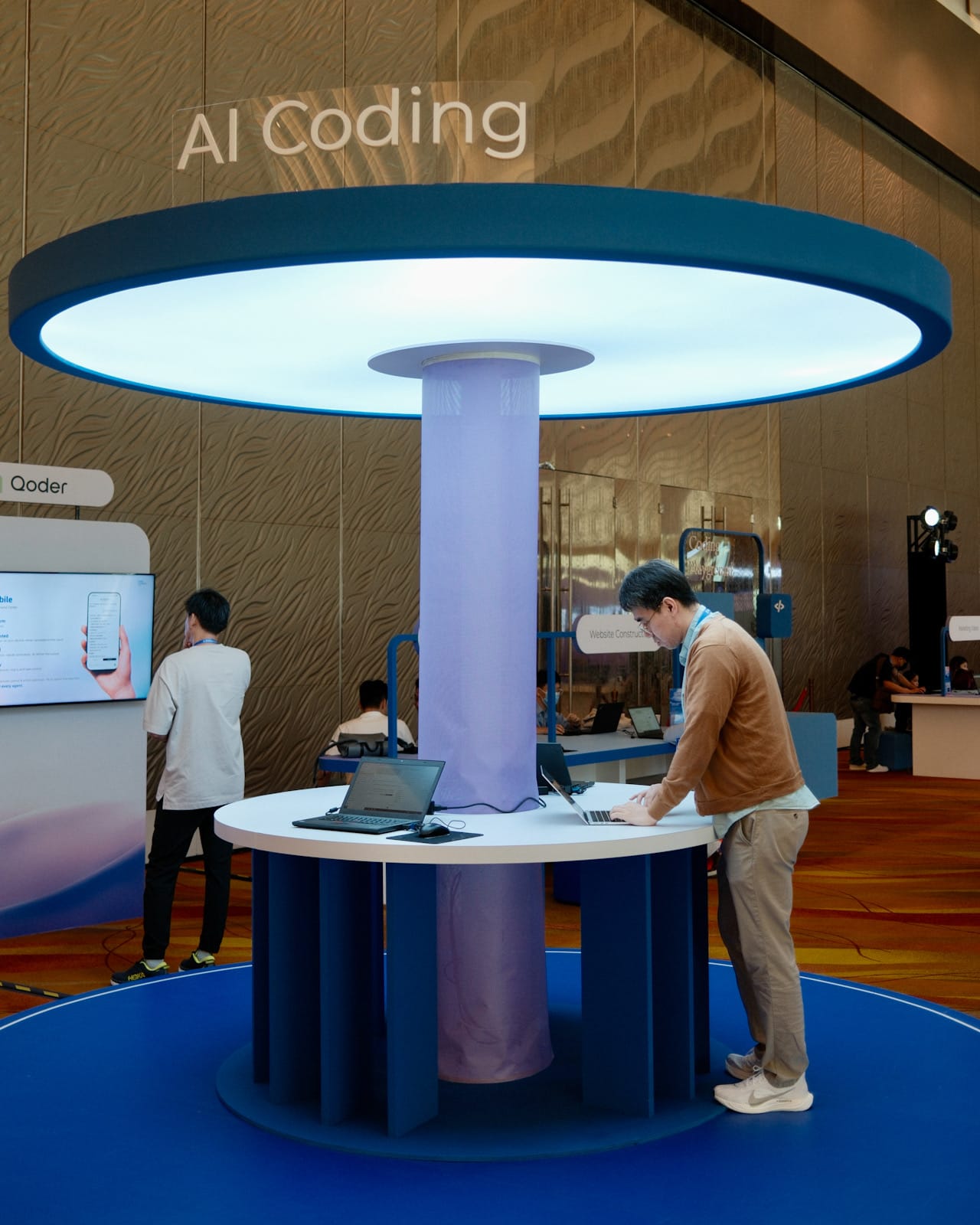 More than just a place to access models and tools, Qwen Cloud is Alibaba’s attempt to make more of the agent-building process available in one place: models, tools, cloud capabilities, coding workflows and deployment options.
Around that sit tools such as Qoder, QoderWork, JVS Claw Teams, and JVS Mobile on Qwen Cloud. Qoder gives developers an agentic coding platform, while QoderWork brings the same idea closer to desktop-based, multi-step workflow automation. JVS Claw Teams and JVS Mobile operate as agents that can run in organisational settings, use approved Skills — Alibaba says it has converted common cloud capabilities across more than 60 cloud products into Skill-based and MCP-compatible formats — and operate across teams or applications with stronger security and management controls.
While Alibaba Cloud isn’t offering an agentic AI silver bullet, it is trying to reduce the early assembly problem: choosing models, connecting tools, wiring up cloud access, and moving from a prototype to a product with less time spent figuring out the plumbing.
Is Alibaba Cloud quietly building a better on-ramp to agentic AI?
Alibaba Cloud is an interesting bet — its deployment of Qwen gives it a clearer open-source-to-enterprise pathway than most, where developers can start with open Qwen models, move into hosted access through Alibaba Cloud, then use Qwen Cloud, Skills, coding tools and deployment products when they need to build more seriously. And with its frontier models catching up with the current leaders, there is an incentive for users to build within that ecosystem.
The company’s work to reduce the early assembly work that slows down many AI projects: choosing models, connecting tools, integrating cloud services, and finding a path from prototype to deployment, makes it hard to dismiss.
While it may not have the enterprise cloud dominance of AWS, Google or Azure, it has a coherent bet: make Qwen the connective tissue between open-source AI, hosted models, agentic workflows, cloud services and enterprise deployment. In a market where many companies are still figuring out how models, tools and agents fit together, that clarity and simplicity could give Alibaba a stronger opening than its current position alone would suggest.